
Scrum में Stakeholder Management: Servant Leader की संपूर्ण गाइड
 Scrum में Stakeholder Management: Servant Leader की संपूर्ण गाइड
प्रभावी stakeholder management एक Scrum Master के लिए सबसे महत्वपूर्ण skills में से एक है। अधिकांश Scrum teams ceremonies और technical practices पर गहराई से ध्यान देती हैं, जबकि stakeholder relationships को बाद की सोच मानती हैं - और फिर आश्चर्य करती हैं कि Sprint Reviews तनावपूर्ण क्यों लगते हैं, backlogs हाईजैक क्यों हो जाते हैं, और delivery timelines संदेह क्यों आकर्षित करती हैं।
सच यह है कि stakeholder relationships तय करती हैं कि आपका Scrum implementation सफल होगा या नहीं। जब stakeholders team पर भरोसा करते हैं, तो वे उसे autonomy देते हैं। जब वे confused होते हैं या बाहर रखे गए महसूस करते हैं, तो वे micromanage करते हैं, Gantt charts मांगते हैं, और Product Owner को bypass करके सीधे developers को काम assign करते हैं।
यह गाइड आपको stakeholder management के लिए एक comprehensive और practical system देती है - identification और classification से लेकर communication planning, Sprint Review facilitation, और टीमों के सामने आने वाले सबसे कठिन stakeholder scenarios को handle करने तक।
Quick Answer: Scrum में Stakeholder Management एक नजर में
| पहलू | विवरण |
|---|---|
| Primary owner | Product Owner (relationships manage करता है); Scrum Master (organizational impediments हटाता है) |
| Key classification tool | Power/Interest Grid - चार quadrants से चार engagement strategies |
| Primary engagement forum | Sprint Review - Increment inspect करना, Product Backlog collaboratively adapt करना |
| Core transparency artifacts | Product Backlog, Sprint Goal, Increment (working software) |
| Key anti-pattern | Sprint Review को status report मानना न कि collaborative working session |
| Servant leader stance | Team को coach करना और shield करना; stakeholders को educate करना; Product Owner को bypass न करना |
विषय सूची-
- Stakeholders के बारे में Scrum Guide का दृष्टिकोण
- PO बनाम Scrum Master: Stakeholder Management का मालिक कौन है?
- Stakeholder Identification और Mapping
- Stakeholder Communication Plan बनाना
- Sprint Review: Primary Stakeholder Engagement Forum
- Scrum Transparency से Expectations का प्रबंधन
- Industry-Specific Stakeholder Management के उदाहरण
- Stakeholder Management Maturity Model
- सामान्य गलतियाँ और Anti-Patterns
- Implementation Guide: पहले 90 दिन
- Stakeholder Management को Scale करना
- निष्कर्ष
Stakeholders के बारे में Scrum Guide का दृष्टिकोण
Scrum Guide (opens in a new tab) "stakeholder" शब्द का उपयोग कम लेकिन सोच-समझकर करती है। 2020 Scrum Guide स्पष्ट रूप से कहती है कि stakeholders Sprint Reviews में inspect और adapt करने के लिए भाग लेते हैं, और Scrum Team उनके साथ खुलकर collaborate करती है।
Scrum Guide जानबूझकर यह खुला छोड़ती है कि इन relationships को कैसे manage किया जाए। यह Scrum की empirical philosophy को दर्शाता है - सही approach आपके context, organization size, industry, और stakeholder landscape पर निर्भर करती है।
Scrum Guide द्वारा स्थापित मुख्य principles:
- Transparency non-negotiable है। Sprint Backlog, Product Backlog, और Increment default रूप से सभी stakeholders के लिए transparent हैं।
- Sprint Review inspection का बिंदु है। इसे working session के रूप में design किया गया है, presentation के रूप में नहीं।
- Product Owner stakeholder interface है। वे Product Backlog ordering और product value maximize करने के लिए accountable हैं।
- Scrum Master organization की सेवा करता है। इसमें stakeholders को Scrum Team के साथ productively interact करने का तरीका coaching करना शामिल है।
Scrum Guide के 2025 Expansion Pack में Scrum Master को एक change agent के रूप में explicitly describe किया गया है जिसका प्रभाव team से परे stakeholders और organizational culture तक फैलना चाहिए।
PO बनाम Scrum Master: Stakeholder Management का मालिक कौन है?
यह Scrum के सबसे अधिक गलत समझे जाने वाले पहलुओं में से एक है। उत्तर यह है कि दोनों roles की अलग-अलग, complementary responsibilities हैं - और उन्हें confuse करने से वास्तविक समस्याएं पैदा होती हैं।
| जिम्मेदारी | Product Owner | Scrum Master |
|---|---|---|
| Stakeholder relationship management | Primary owner | PO को support और coach करता है |
| Product Backlog का stakeholder needs से alignment | Accountable | कोई direct role नहीं |
| Sprint Reviews facilitate करना | Present करता है और feedback collect करता है | Event facilitate करता है |
| Stakeholder priority conflicts resolve करना | Decision authority | Process facilitate करता है |
| Stakeholders को affect करने वाले organizational impediments हटाना | Impediments report करता है | Impediments resolve करता है |
| Stakeholders को Scrum पर educate करना | Product decisions के बारे में inform करता है | Scrum practices पर coach करता है |
| Team को scope interruptions से बचाना | PB पर boundaries set करता है | Sprint के दौरान team को shield करता है |
⚠️
एक Scrum Master जो Product Owner से independent होकर stakeholder relationships manage करना शुरू करता है, वह अपनी सीमा लांघ रहा है। यह एक दूसरी product voice बनाता है जो stakeholders को confuse करती है और PO की authority को undermine करती है। PO को coach करें; उन्हें replace न करें।
Stakeholder Identification और Mapping
Stakeholders को manage करने से पहले, आपको यह जानना होगा कि वे कौन हैं। अधिकांश teams केवल obvious business contacts के बारे में सोचकर अपने stakeholder landscape को dramatically underestimate करती हैं। एक comprehensive stakeholder map में आमतौर पर शामिल होते हैं:
- Business sponsors और budget holders
- End users और user representatives
- Operations और support teams जो product maintain करेंगी
- Legal, compliance, और security teams
- अन्य development teams जिन पर dependencies हैं
- External vendors और integration partners
- Senior leadership strategic interest के साथ
- Regulatory bodies governed industries में
Power/Interest Grid
Power/Interest Grid (Agile context में Roman Pichler और Geoff Watts द्वारा popularize किया गया) stakeholder mapping के लिए सबसे practical tool है। यह stakeholders को दो dimensions पर classify करता है: decisions को influence करने की उनकी power और product में उनकी interest का level।
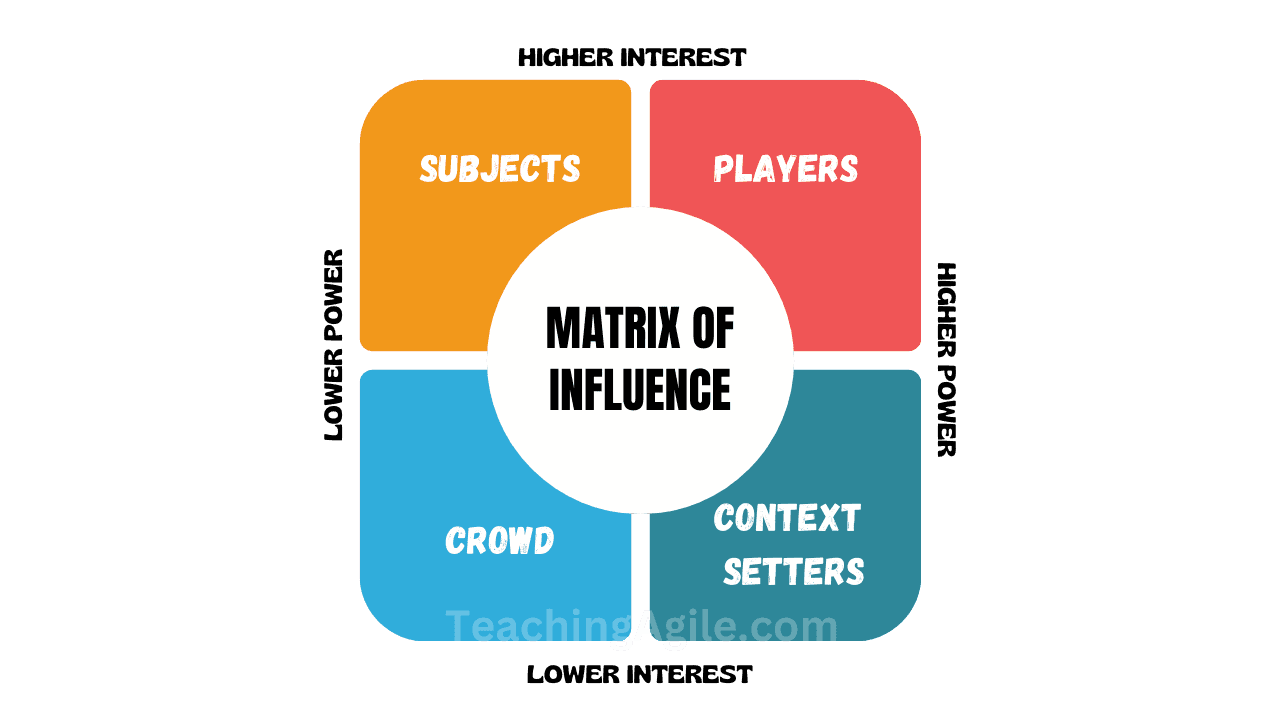 Matrix of Influence - Power Interest Grid for Stakeholder Management
चार Quadrants और Engagement Strategies:
| Quadrant | Power | Interest | Strategy | Scrum Touchpoints |
|---|---|---|---|---|
| Players | High | High | Closely collaborate करें | Sprint Reviews, roadmap sessions, weekly check-ins |
| Subjects | Low | High | नियमित रूप से involve करें | Sprint Reviews, user research, feedback surveys |
| Context Setters | High | Low | Periodically consult करें | Quarterly one-on-ones, executive summaries |
| Crowd | Low | Low | Minimally inform करें | Newsletters, shared backlog access, release notes |
Practical mapping tips:
- Project start पर stakeholders map करें, फिर हर quarter review करें - products mature होने पर positions बदलते हैं
- Power level के बारे में uncertain होने पर, कम engagement की बजाय अधिक engagement की ओर err करें
- Stakeholder की stated interest अक्सर उनके actual influence से अलग होती है - दोनों को independently validate करें
- Context Setters सबसे dangerous stakeholders हैं जिन्हें neglect करने पर। वे शायद ही कभी updates माँगते हैं, लेकिन blindsided महसूस होने पर तुरंत initiatives block कर सकते हैं।
Diffusion of Innovation Theory
Everett Rogers का Diffusion of Innovation framework stakeholder classification के लिए एक दूसरा lens प्रदान करता है - विशेष रूप से Agile transformations और नए product launches के दौरान उपयोगी।
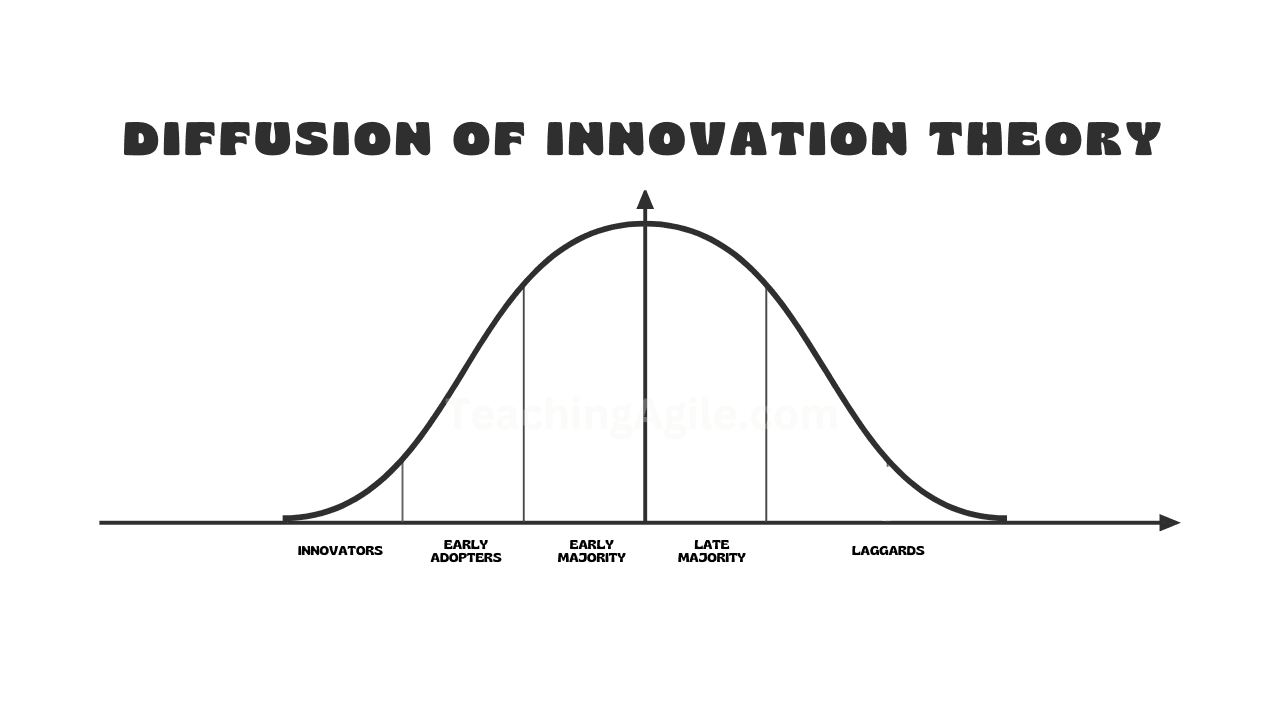 Diffusion of Innovation Theory by Everett Rogers - Stakeholder Adoption Stages
| Adopter Type | Share | Characteristics | Scrum Engagement |
|---|---|---|---|
| Innovators | ~2.5% | Risk-tolerant, technology-driven, informal opinion leaders | उनके साथ early co-create करें; early Sprint Reviews के लिए बढ़िया |
| Early Adopters | ~13.5% | Peers द्वारा respected, strategic thinkers | Champions और change agents; उन्हें early access दें |
| Early Majority | ~34% | Deliberate, proof of concept चाहिए | Sprint Review demos + peer testimonials की जरूरत है |
| Late Majority | ~34% | Skeptical, risk-averse, crowd को follow करते हैं | Peer adoption data और formal documentation से respond करते हैं |
| Laggards | ~16% | Tradition-bound, openly resistant हो सकते हैं | Practical concerns address करें; disproportionate energy invest न करें |
Key insight: Innovators और Early Adopters के साथ engagement investment शुरू करें। उनकी visible success वह social proof बन जाती है जो Early Majority को move करती है - जहाँ अधिकांश organizational momentum रहता है।
User/Influencer/Provider/Governance Model
यह model stakeholders को organizational power के बजाय product के साथ उनके relationship के आधार पर categorize करता है - जो इसे product-centric teams के लिए विशेष रूप से उपयोगी बनाता है।
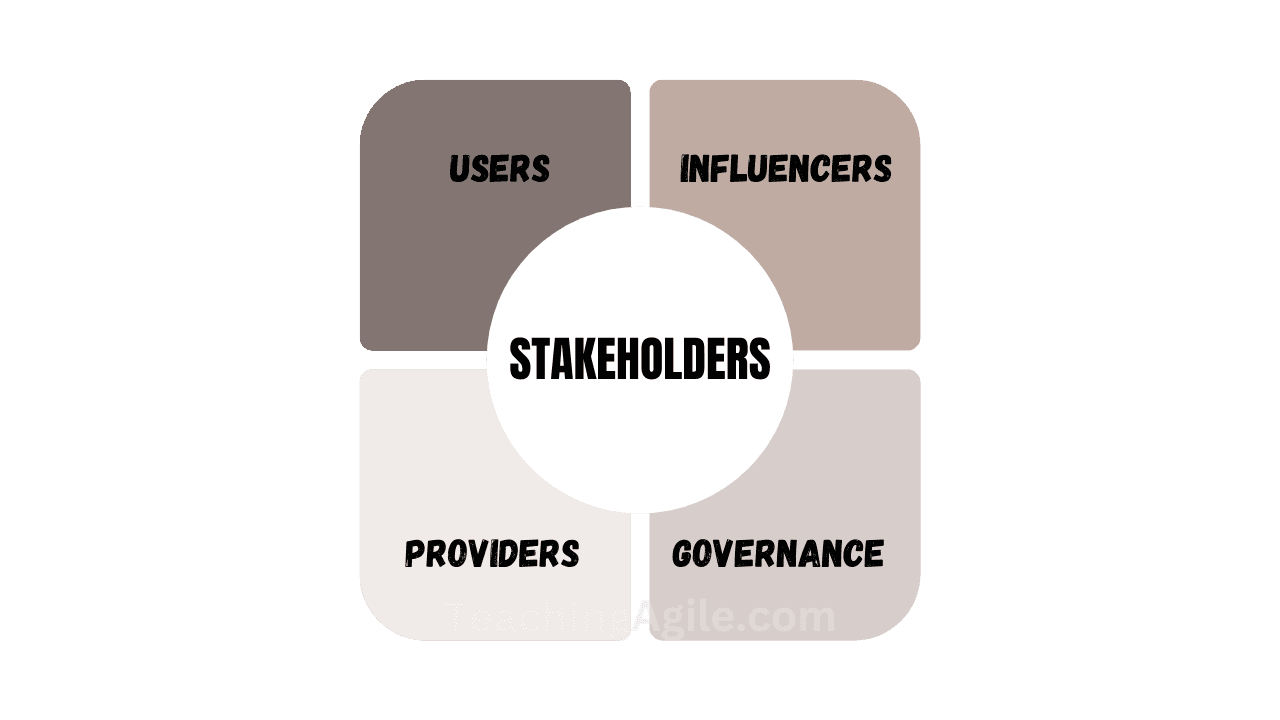 The User/Influencer/Provider/Governance Model for Stakeholder Classification
- Users - वे लोग जो directly product के साथ interact करते हैं। उनका feedback usability और feature prioritization को drive करता है। Real-world usage scenarios demonstrate करने के लिए उन्हें Sprint Reviews में invite करें।
- Influencers - वे individuals या groups जो इसका उपयोग किए बिना product direction को shape करते हैं। इसमें marketing teams, analysts, और internal champions शामिल हैं। उन्हें roadmap conversations में engage करें।
- Providers - Vendors, API partners, infrastructure teams, और external suppliers जिनके contributions आपकी deliver करने की क्षमता को affect करते हैं। उन्हें dependency tracking और clear interface agreements के through manage करें।
- Governance - Legal, compliance, security, और regulatory stakeholders। उनकी day-to-day interest कम हो सकती है लेकिन वे veto power exercise कर सकते हैं। Late-stage surprises कम करने के लिए उनकी requirements को Definition of Done में embed करें।
Stakeholder Communication Plan बनाना
एक stakeholder map यह बताता है कि आपके stakeholders कौन हैं। एक communication plan यह बताता है कि आप प्रत्येक group के साथ HOW, WHEN, और WHAT communicate करते हैं। प्रभावी stakeholder management के लिए दोनों जरूरी हैं।
Core communication plan template:
| Stakeholder Group | Key Needs | Channel | Frequency | Owner |
|---|---|---|---|---|
| Players (High P/High I) | Strategic alignment, trade-offs में early visibility | Sprint Review + weekly sync | Weekly | Product Owner |
| Subjects (Low P/High I) | Feedback provide करने का अवसर, सुना हुआ महसूस करना | Sprint Review + surveys | Each Sprint | Product Owner |
| Context Setters (High P/Low I) | Business outcomes, risk visibility, कोई surprise नहीं | Executive summary + quarterly briefing | Quarterly | Product Owner + SM |
| Crowd (Low P/Low I) | Basic awareness, release information | Newsletter, shared backlog | Monthly | Team |
| Governance stakeholders | Compliance evidence, audit trails | Formal reports, DoD artifacts | Per compliance schedule | PO + SM |
Stakeholder type के अनुसार communication channel options:
- Synchronous (real-time): Sprint Reviews, dedicated stakeholder workshops, one-on-ones, product demos
- Asynchronous: Jira/Linear में shared Product Backlog, release notes, team newsletters, Confluence pages, recorded Sprint Review demos
- Self-service: Public roadmaps, work-in-progress visibility के साथ Kanban boards, stakeholder portals
सबसे अच्छा communication plan वह है जिसे आपका Product Owner actually follow करेगा। Simple शुरू करें - प्रति stakeholder group एक channel - और complexity तभी जोड़ें जब कोई clear gap हो।
Sprint Review: Primary Stakeholder Engagement Forum
Sprint Review Scrum का built-in stakeholder engagement mechanism है। जब अच्छी तरह से facilitated किया जाए, तो यह अधिकांश stakeholder status meetings को replace करता है, priorities को collaboratively align करता है, और genuine shared ownership बनाता है।
एक high-quality Sprint Review कैसी दिखती है:
- Context setting (5 min): Product Owner Sprint Goal recap करता है और क्या पूरा हुआ और क्या नहीं
- Increment demonstration (15-20 min): Developers acceptance criteria के against working software demonstrate करते हैं - slides नहीं
- Open discussion और feedback (20-25 min): Stakeholders directly Increment के साथ interact करते हैं और observations share करते हैं
- Product Backlog review (10-15 min): Product Owner upcoming priorities present करता है; stakeholders ordering पर input provide करते हैं
- Marketplace adaptation (5-10 min): Group discuss करता है कि environment में क्या बदला जो product को affect करता है
Sprint Review के दौरान Scrum Master की facilitation responsibilities:
- Agenda set करें और time-boxing सुनिश्चित करें
- Ground rules establish करें जो candid feedback को encourage करें (केवल praise नहीं)
- Review को backlog discipline के बिना feature-request free-for-all बनने से रोकें
- Stakeholder feedback को verbal promises के बजाय discrete Product Backlog items के रूप में capture करें
- Stakeholder dynamics देखें - quieter voices को protect करें और dominant speakers को manage करें
- Clear next steps और decisions के साथ close करें
⚠️
सबसे बड़ा Sprint Review anti-pattern इसे PowerPoint presentation की तरह treat करना है। यदि team slides दिखा रही है working software की बजाय, तो आपको जो feedback मिलता है वह abstract होता है और बहुत कम actionable होता है। Product दिखाएं, उसकी picture नहीं।
Scrum Transparency से Expectations का प्रबंधन
Scrum के तीन pillars - transparency, inspection, और adaptation - आपके सबसे powerful expectation management tools हैं।
Transparency mechanisms जो stakeholder expectations को proactively manage करते हैं:
| Artifact/Practice | क्या Visible बनाता है | कौन सी Expectation Manage करता है |
|---|---|---|
| Shared Product Backlog | Priorities और उनकी relative ordering | Feature X अभी तक क्यों नहीं बन रहा |
| Sprint Goal | इस Sprint पर focus क्या है | Team सब कुछ एक साथ नहीं कर रही |
| Sprint Burn-down chart | Sprint के अंदर progress | Team Sprint Goal meet करने के track पर है या नहीं |
| Definition of Done | हर item पर apply quality standards | Ship होने से पहले "done" का actual मतलब |
| Velocity trend | Historical delivery rate | Roadmap planning के लिए realistic forecasting |
| Release roadmap | Sprints में planned feature delivery | False precision के बिना long-term direction |
Expectation management conversation जो हर team को करनी चाहिए:
Stakeholders अक्सर waterfall mental models लेकर आते हैं - fixed scope, fixed timeline, fixed cost। Scrum Master का काम conversation को reframe करना है: एक empirical system में, आप तीन में से दो fix कर सकते हैं लेकिन तीनों नहीं। इसे early explicit बनाना - और stakeholders को दिखाना कि Scrum actually उन्हें frequent inspection points के through अधिक control देता है - foundational stakeholder education है।
Industry-Specific Stakeholder Management के उदाहरण
SaaS / Cloud Services
Key stakeholders: Enterprise customers, customer success managers, operations teams, on-call engineering
Communication plan highlights:
- Customer-facing transparency के लिए public-facing product roadmap publish करें (भले ही high-level हो)
- Account conversations के लिए customer success teams के साथ Sprint Review recordings share करें
- एक अलग "Voice of Customer" channel बनाएं जहाँ CSMs user feedback को Product Owner तक funnel करें
- Reliability features demonstrate होने पर uptime/performance SLA owners को Sprint Reviews में include करें
- Compliance stakeholders (SOC 2, ISO 27001) को quarterly security posture updates मिलनी चाहिए
Healthcare और Life Sciences
Key stakeholders: Clinical users, compliance officers (HIPAA), IT security, legal, regulatory (FDA यदि applicable हो)
Communication plan highlights:
- Governance stakeholders (compliance, legal, regulatory) को project start पर map किया जाना चाहिए और Definition of Done criteria में include किया जाना चाहिए
- Sprint Reviews से अलग, quarterly dedicated compliance review sessions चलाएं
- Clinical users को realistic clinical workflow scenarios के साथ usability-focused Sprint Reviews चाहिए
- PHI data handling में किसी भी बदलाव के लिए Sprint commitment से पहले formal sign-off workflow चाहिए
- Product Backlog के साथ-साथ compliance artifact backlog maintain करें
Financial Services
Key stakeholders: Risk और compliance teams, audit, fraud prevention, product managers, regulators
Communication plan highlights:
- Risk officers typically Context Setters होते हैं - high power, episodic interest - quarterly executive-level summaries की जरूरत होती है
- Audit stakeholders को हर Sprint के लिए Definition of Done application का evidence चाहिए
- PCI-DSS या SOC 2 scope touch करने वाले features के लिए separate "security और compliance Sprint Review" supplements चलाएं
- Fraud prevention teams Subjects होनी चाहिए (high interest) - payment features के लिए user story refinement में शामिल करें
- Regulators Governance stakeholders हैं - formal channels के through engage करें, informally नहीं
E-commerce और Retail
Key stakeholders: Merchandising teams, marketing, site reliability engineers, customer service, third-party sellers/partners
Communication plan highlights:
- Seasonal calendar awareness critical है - major retail events से पहले Sprint Reviews (Black Friday, peak seasons) में operations stakeholders explicitly शामिल होने चाहिए
- Marketing stakeholders के अक्सर time-sensitive dependencies होती हैं (campaign launches) जिन्हें explicit Sprint-level coordination चाहिए
- Customer service teams high-value Subjects हैं - वे directly users से सुनते हैं और सबसे actionable feedback surface करते हैं
- Third-party platform partners (payment processors, logistics APIs) Providers हैं जिन्हें regular dependency reviews चाहिए
Enterprise / DevOps Teams
Key stakeholders: Platform teams, security operations (SecOps), internal customers (अन्य dev teams), IT leadership
Communication plan highlights:
- Platform team के internal customers Subjects हैं - उन्हें external observers के रूप में नहीं, primary users के रूप में Sprint Reviews में engage करें
- SecOps teams किसी भी infrastructure या deployment changes के लिए Governance stakeholders हैं - security review को Definition of Done में embed करें
- IT leadership को typically deployment frequency, change failure rate, और mean time to recovery (MTTR) दिखाने वाले executive dashboards चाहिए
- Platform teams को ad-hoc interruptions कम करने के लिए internal stakeholders के लिए open "office hours" format चलानी चाहिए
Government और Public Sector
Key stakeholders: Citizens (end users), procurement officers, legal/policy teams, elected officials या political sponsors, accessibility advocates
Communication plan highlights:
- Accessibility (508 compliance / WCAG 2.1 AA) stakeholders को Definition of Done में embed किया जाना चाहिए - late-stage concern के रूप में treat नहीं
- Procurement और contract stakeholders extremely high blocking power वाले Context Setters हैं - उन्हें scope और budget adherence के बारे में regularly inform करते रहें
- Citizen representatives के लिए open public-facing Sprint Reviews या "show and tell" sessions public trust build करते हैं और genuine user feedback generate करते हैं
- FISMA या FedRAMP compliance teams Governance stakeholders हैं जिन्हें structured evidence packages चाहिए, informal Sprint Reviews नहीं
Mobile App Development
Key stakeholders: App store review teams (Apple/Google), UX designers, analytics teams, device manufacturer partners, marketing
Communication plan highlights:
- App store submission एक external dependency है जिसके लिए business stakeholders को timeline communication चाहिए - unexpected review delays release commitments को affect करती हैं
- App store policy teams external Governance stakeholders हैं - उनकी requirements (privacy labels, content guidelines) Definition of Done में होनी चाहिए
- Analytics और growth teams Subjects हैं जिन्हें हर release से user behavior data में high interest है - release notes और tracked metrics post-Sprint share करें
- Performance benchmarks (app startup time, battery usage, crash rates) Definition of Done का हिस्सा होने चाहिए और Sprint Reviews में visible होने चाहिए
EdTech और Learning Platforms
Key stakeholders: Educators/instructors, students, school administrators, parents, data privacy officers (FERPA/COPPA)
Communication plan highlights:
- Student data privacy (FERPA, COPPA) officers Governance stakeholders हैं - student data touch करने वाले किसी भी feature के लिए formal sign-off चाहिए
- Educators Players या Subjects हो सकते हैं आपके product पर निर्भर करते हुए - उन्हें primary users के रूप में user story writing और Sprint Reviews में involve करें
- School administrators Context Setters हैं - वे procurement और adoption control करते हैं, day-to-day usage नहीं
- Diverse learner needs के लिए Accessibility (cognitive accessibility, multiple language support) Definition of Done का standard criterion होनी चाहिए
Stakeholder Management Maturity Model
Stakeholder management capabilities समय के साथ develop होती हैं। यह model teams को अपना current stage assess करने और अगले concrete improvement की identify करने में मदद करता है।
Stage 1: Reactive (Sprints 1-6)
Characteristics:
- Stakeholders को Sprint Reviews में invite किया जाता है लेकिन engagement inconsistent है
- कोई formal stakeholder map नहीं - team stakeholders को informally जानती है
- Communication तब होती है जब problems arise होती हैं
- Sprint Reviews के दौरान feedback verbally capture किया जाता है लेकिन अक्सर खो जाता है
- Sprint Reviews में surprises common हैं
Typical Sprint Review experience: कुछ stakeholders attend करते हैं, कुछ नहीं। Feedback gather किया जाता है लेकिन systematically backlog में capture नहीं होता।
Next steps:
- Names, roles, और contact information के साथ basic stakeholder list बनाएं
- Consistent Sprint Review invitation list और format establish करें
- Sprint Review feedback को writing में Product Backlog items के रूप में capture करना शुरू करें
Stage 2: Structured (Sprints 7-15)
Characteristics:
- Formal Power/Interest Grid complete और quarterly reviewed
- Key stakeholder groups के लिए Sprint Review attendance consistent है
- हर quadrant के लिए basic communication plan exist करता है
- Sprint Reviews का feedback systematically Product Backlog में add किया जाता है
- Product Owner Sprints के बीच regular stakeholder check-ins conduct करता है
Typical Sprint Review experience: Well-attended, structured agenda, feedback PBIs के रूप में captured। Stakeholders जानते हैं क्या expect करना है।
Next steps:
- Stakeholder-specific communication channels add करें (newsletters, exec summaries)
- Stakeholders के लिए पहला dedicated Scrum education session चलाएं
- Stakeholder feedback loop बनाएं: stakeholders को दिखाएं कि उनके previous Sprint Review feedback का क्या हुआ
Stage 3: Proactive (Sprints 16-24)
Characteristics:
- Stakeholder engagement Sprint planning में एक consideration के रूप में embedded है
- Communication plan documented, maintained, और regularly executed है
- Stakeholders dedicated planning sessions में roadmap priorities co-create करते हैं
- Metrics (velocity, cycle time) relevant stakeholders के साथ proactively share किए जाते हैं
- Difficult stakeholder relationships documented engagement plans के साथ actively managed हैं
Typical Sprint Review experience: Stakeholders prepared होकर आते हैं, feedback targeted और actionable होता है, backlog priorities के बारे में decisions real time में लिए जाते हैं।
Next steps:
- Strategic input के लिए stakeholder advisory group establish करें
- Stakeholder satisfaction measurement शुरू करें (informal NPS या feedback survey)
- Stakeholder conflicts के लिए formal escalation path बनाएं
Stage 4: Optimizing (Sprint 25+)
Characteristics:
- Stakeholders product strategy में active partners हैं, केवल reviewers नहीं
- Communication को process पर stakeholder feedback के आधार पर continuously optimize किया जाता है
- Stakeholder management practices documented हैं और new stakeholders को onboard करने के लिए उपयोग की जाती हैं
- Team confidently complex, politically sensitive stakeholder situations manage कर सकती है
- Stakeholder satisfaction measure और improve हो रही है
Typical Sprint Review experience: Collaborative, bi-directional sessions जहाँ stakeholders और team मिलकर product direction co-create करते हैं। कोई surprise नहीं, high trust।
सामान्य गलतियाँ और Anti-Patterns
Mistake 1: Sprint Review को Status Report मानना
Problem: Team working software demonstrate करने की बजाय slides present करती है।
यह problematic क्यों है: Abstract presentations abstract feedback generate करती हैं। Stakeholders features पर useful input नहीं दे सकते जो वे देख या interact नहीं कर सकते। Sprint Review का inspect-and-adapt purpose खो जाता है।
Fix: Standing rule बनाएं "product features के लिए कोई slides नहीं।" Developers actual environment में working software demonstrate करें। Product Owner context present करे; team product दिखाए।
Prevention: "Working software demonstrate करना" को अपने team agreements में Sprint Review quality criterion के रूप में include करें।
Mistake 2: हर Sprint में relevance की परवाह किए बिना Same Stakeholders को Invite करना
Problem: Content चाहे जो भी हो, वही पाँच stakeholders हर Sprint Review में attend करते हैं।
यह problematic क्यों है: Disengaged stakeholders noise बन जाते हैं, generic feedback provide करते हैं। Time के साथ, high-value stakeholders Sprint Reviews entirely skip करना शुरू कर देते हैं।
Fix: हर Sprint में Increment की content के आधार पर Sprint Review invitation list curate करें। यदि Sprint 14 सब backend performance work है, तो UX stakeholders को attend करने की जरूरत नहीं। उन्हें बताएं कि यह intentional है।
Prevention: Sprint planning के part के रूप में, identify करें कि इस Sprint की deliverables में किन stakeholder groups की highest interest है और उनकी attendance prioritize करें।
Mistake 3: Sprints के बीच कोई Communication नहीं
Problem: केवल stakeholder touchpoint Sprint Review है।
यह problematic क्यों है: No communication के साथ दो-सप्ताह का gap काफी समय है stakeholder anxiety, political escalations, या competing priorities के लिए जो backlog-hijacking request के रूप में Sprint Review में explode हो सकती हैं।
Fix: Sprint के बीच light-touch communication rhythm establish करें। यह key Players को weekly एक paragraph email हो सकती है, एक shared Jira filter जो stakeholders को in-progress work check करने देती है, या Product Owner का हर Monday brief Slack post।
Prevention: Communication plan में Sprint Review attendance के साथ-साथ between-Sprint touchpoints specify करने चाहिए।
Mistake 4: Stakeholders को Developers को Directly Work Assign करने देना
Problem: कोई senior stakeholder directly किसी developer को "quick fix" या नई feature के लिए message भेजता है, Product Owner और Product Backlog को bypass करते हुए।
यह problematic क्यों है: यह pattern Sprint predictability destroy करता है, Product Owner की authority undermine करता है, और stakeholders को सिखाता है कि backlog process optional है।
Fix: Scrum Master को इस pattern को immediately address करना चाहिए - पहले developer को coach करके कि सभी requests Product Owner के through route करें, फिर stakeholder के साथ direct, respectful conversation करके कि backlog process क्यों exist करती है।
Prevention: Stakeholder onboarding के दौरान, explicitly "one voice, one backlog" principle explain करें और stakeholders को Product Owner को requests submit करने का easy path दें।
Mistake 5: Critical Feedback Accept किए बिना Sprint Reviews Present करना
Problem: Sprint Reviews के दौरान stakeholders concerns raise करने पर team (या Product Owner) defensive हो जाती है, feedback को valuable input की बजाय criticism treat करती है।
यह problematic क्यों है: Stakeholders honest feedback देना बंद कर देते हैं। Sprint Review performative हो जाता है, और real problems तभी surface होती हैं जब वे crisis बन जाती हैं।
Fix: Scrum Master को Sprint Reviews के दौरान non-defensive responses model करने चाहिए - stakeholders की critical observations के लिए explicitly thank करें और उन्हें Product Backlog items या retrospective inputs के रूप में capture करें।
Prevention: Sprint Reviews के बीच team को "मेरे काम की criticism हो रही है" और "product feedback के through improve हो रहा है" के बीच distinction पर coach करें।
Mistake 6: Crisis होने तक Context Setters को Ignore करना
Problem: Team के high-power, low-interest stakeholders (executives, legal, compliance) के साथ कोई relationship नहीं है जब तक कुछ गलत न हो जाए।
यह problematic क्यों है: जब crisis आती है, Scrum Team को इसे navigate करने के लिए इन stakeholders के साथ trust और credibility चाहिए। Pre-existing relationship के बिना, team के पास कोई credit नहीं है और worst possible moment पर skepticism face करती है।
Fix: Context Setters के साथ quarterly briefings proactively schedule करें। उन्हें short रखें (30 minutes), Scrum mechanics की बजाय business outcomes पर focused रखें।
Prevention: Communication plan में शुरू से ही Context Setter engagement include करें, भले ही frequency कम हो।
Mistake 7: Stakeholder Management को People-Pleasing समझना
Problem: Product Owner और Scrum Master conflict avoid करने के लिए सभी stakeholder requests पर "yes" कहते हैं, जिससे backlog balloon हो जाता है और team strategic focus खो देती है।
यह problematic क्यों है: Well-meaning stakeholder appeasement से backlog items अक्सर higher-value work को displace करते हैं। Team अधिक features deliver करती है लेकिन कम value।
Fix: Product Owner को backlog ordering पर strategic authority maintain करनी चाहिए। "हमने आपके idea को backlog में capture किया है और इसे अपनी priorities के against evaluate करेंगे" कहना rejection नहीं है - यह system का सही काम करना है।
Prevention: Strategic themes के साथ visible, shared roadmap बनाना कुछ requests current priorities में fit न होने का explain करना easier बनाता है।
Mistake 8: Stakeholder Map को Update करने में Fail होना
Problem: Team project kickoff पर stakeholder map बनाती है और कभी review नहीं करती।
यह problematic क्यों है: Stakeholder landscapes बदलते हैं। Key people leave करते हैं, organizational structures shift होती हैं, नई regulatory requirements नए governance stakeholders बनाती हैं।
Fix: Stakeholder map review को Product Owner के regular cadence के part के रूप में quarterly schedule करें। इसे special project नहीं, maintenance activity मानें।
Prevention: Quarterly planning agenda में stakeholder map review add करें और इसे Product Owner को Scrum Master support के साथ assign करें।
Implementation Guide: पहले 90 दिन
Days 1-14: Foundation
- चार categories (Users, Influencers, Providers, Governance) में सभी current stakeholders list करें
- हर stakeholder को Power/Interest Grid पर plot करें
- तीन से पाँच most critical Players identify करें जिन्हें immediate relationship investment की जरूरत है
- Current Sprint Review format audit करें - क्या यह working software demonstrate कर रहा है या slides दिखा रहा है?
- Product Owner के साथ उनकी current stakeholder engagement habits के बारे में direct conversation करें
Days 15-30: Practices Establish करना
- सभी चार quadrants covering stakeholder communication plan का first draft बनाएं
- जरूरत हो तो Sprint Review format redesign करें - working software demonstration norm establish करें
- Context Setter stakeholders के लिए पहली quarterly stakeholder briefing schedule करें
- किसी भी between-Sprint communication gap identify करें और एक low-overhead channel implement करें (weekly email, shared backlog access)
- Confirm करें कि Sprint Review feedback Product Backlog items के रूप में capture हो रहा है
Days 31-60: Relationships Build करना
- Product Owner को top तीन से पाँच Players के साथ one-on-ones schedule करने के लिए coach करें
- Framework से unfamiliar किसी भी stakeholder के लिए short "Scrum for Stakeholders" briefing चलाएं
- एक existing difficult stakeholder dynamic identify करें और उसके लिए specific engagement plan develop करें
- First month's Sprint Review feedback review करें - क्या stakeholders attend कर रहे हैं? क्या feedback actionable है?
- Stakeholder satisfaction को informal retrospective topic के रूप में add करें
Days 61-90: Optimizing और Sustaining
- पहला quarterly stakeholder map review conduct करें
- Informal stakeholder satisfaction measure करें - दो से तीन key Players से पूछें कि वे engagement quality के बारे में कैसा महसूस करते हैं
- Stakeholder management improvements को retrospective में broader team के सामने present करें
- Maturity model पर next maturity stage identify करें और उसकी ओर specific improvements plan करें
- Team के लिए stakeholder management practice guide के रूप में जो काम कर रहा है उसे document करें
Stakeholder Management को Scale करना
जब Scrum multiple teams तक scale होता है Nexus या LeSS जैसे frameworks का उपयोग करके, तो stakeholder management complexity non-linearly बढ़ती है। नई challenges emerge होती हैं:
Teams में consistency: Different teams को different stakeholders से conflicting signals मिल सकते हैं। एक single Product Backlog with clear ownership teams को competing directions में खिंचने से रोकता है।
Scaled Sprint Reviews: Multi-team Sprint Reviews ("big room" reviews) overwhelming हो सकते हैं। Effective approaches में शामिल हैं:
- Topic-based breakout sessions जहाँ stakeholders केवल उनसे relevant team reviews में attend करते हैं
- एक single integrated review जिसमें brief team demonstrations के बाद cross-team Q&A होता है
- Rolling Sprint schedules जो reviews को एक दिन concentrate करने की बजाय सप्ताह में spread करते हैं
Portfolio level पर stakeholder mapping: Scaled contexts में, stakeholder map program-level और portfolio-level stakeholders को include करने के लिए expand होता है जिनका individual teams के साथ कोई relationship नहीं है। Program-level Scrum Masters (या SAFe में Release Train Engineers) typically stakeholder engagement की इस layer own करते हैं।
Teams में competing stakeholder demands manage करना: जब दो teams competing stakeholder groups serve करती हैं, तो Product Owner (या Chief Product Owner) arbitration point होना चाहिए। Scrum Master का काम इन conflicts को transparently surface करना है बजाय teams को उन्हें backlog manipulation के through silently resolve करने देने के।
Scale पर, Scrum Master तेजी से team-level servant leader की बजाय organizational facilitator बन जाता है। Enterprise stakeholder management के लिए जरूरी skills - political navigation, executive communication, organizational design - team-level Scrum facilitation से distinct हैं और deliberately develop की जानी चाहिए।
निष्कर्ष
Stakeholder management Scrum का peripheral soft skill नहीं है - यह एक core delivery mechanism है। Stakeholder engagement में master teams को higher-trust Sprint Reviews से अधिक actionable feedback मिलती है, mid-Sprint interruptions कम होते हैं, impediment removal के दौरान greater organizational support मिलता है, और जो build होता है और business को actually जरूरत होती है उसके बीच better alignment होती है।
आगे ले जाने के लिए key principles:
- Engage करने से पहले classify करें। Power/Interest Grid का उपयोग करें अपनी engagement energy को highest leverage पर allocate करने के लिए।
- PO और SM responsibilities को distinguish करें। Product Owner relationships manage करता है; Scrum Master impediments हटाता है और coach करता है।
- Sprint Reviews को genuinely collaborative बनाएं। Working software दिखाएं, critical feedback invite करें, और सब कुछ backlog में capture करें।
- Sprints के बीच communicate करें। Transparency एक continuous commitment है, न कि Sprint-cadenced event।
- अपनी maturity evolve करें। Reactive stakeholder management एक starting point है, destination नहीं।
- Walls बनाए बिना team को protect करें। Developers को scope interruptions से shield करें जबकि transparency के through organizational goodwill build करें।
प्रभावी stakeholder management उस Scrum team जो features deliver करती है और उस Scrum team के बीच का अंतर है जो value deliver करती है। Relationships, communication systems, और transparent practices में investment compound होती है - हर Sprint में, stakeholder trust बढ़ती है या घटती है इस बात के आधार पर कि आप इन interactions को कितनी अच्छी तरह manage करते हैं।
प्रश्नोत्तरी: स्टेकहोल्डर प्रबंधन
आपका स्कोर: 0/15
प्रश्न: 2020 Scrum Guide के अनुसार, Scrum Master stakeholder engagement में organization को किस प्रकार support करता है?
अक्सर पूछे जाने वाले प्रश्न (FAQs)
Scrum में stakeholder management traditional project management से कैसे अलग है?
क्या Scrum Master Product Owner की involvement के बिना independently stakeholders manage कर सकता है?
जब कोई stakeholder Product Owner को bypass करके सीधे Development Team को काम देने की कोशिश करे, तो Scrum Master को क्या करना चाहिए?
Fully remote या distributed Agile teams के लिए stakeholder management कैसे adapt होनी चाहिए?
WIP limits और flow metrics stakeholder management में कैसे help करते हैं?
Scrum Master ऐसे stakeholder को कैसे handle करे जिसे deep technical opinions हैं और वो frequently Development Team decisions challenge करता है?
क्या Sprint Review में stakeholder group के लिए कोई right size है?
Scrum Master healthcare या financial services जैसे highly regulated industries में stakeholders को कैसे manage करे?
Stakeholder management में psychological safety क्या role play करती है?
जब organization Agile transformation undergo कर रही हो, तो Scrum Master stakeholder management को कैसे approach करे?
क्या Product Owner role और stakeholder management responsibilities दो लोगों में split हो सकती हैं?
Scrum में startup और large enterprise के बीच stakeholder management कैसे differ करती है?
Structured stakeholder management practices में invest करने का ROI क्या है?
Scrum Master equal power वाले multiple stakeholders से competing priorities को कैसे handle करे?
Scrum में stakeholder management पर diversity, equity, और inclusion considerations कैसे apply होती हैं?
Scrum Master Coaching और FacilitationScrum Master coaching stances, powerful questions, और facilitation techniques में महारत हासिल करें। Teams और organisations को coach करने की definitive guide।
Scrum Teams में संघर्ष समाधानScrum Master के रूप में टीम के संघर्षों को प्रभावी ढंग से सुलझाने की तकनीकें और रणनीतियाँ सीखें।
Self-Organization को बढ़ावा देनाScrum Master कैसे टीम में स्व-संगठन और स्वायत्तता की संस्कृति बनाता है, यह जानें।
User Story MappingUser Story Mapping तकनीक का उपयोग करके बेहतर Product Backlog और sprint योजना बनाएं।
Team Dynamics की चुनौतियाँScrum टीमों में team dynamics को समझना और उच्च-प्रदर्शन वाली टीम बनाने की रणनीतियाँ।
Scrum में Organizational ChallengesOrganizations में Scrum implementation की चुनौतियों को पहचानें और उन्हें overcome करने की proven strategies सीखें।
Agile Transformationसंगठनों में Agile transformation को सफलतापूर्वक लागू करने के लिए व्यापक मार्गदर्शिका।
Scrum को Scale करनाNexus, LeSS, और SAFe frameworks के साथ multiple teams तक Scrum को scale करने की strategies और best practices।