
Von Abhay Talreja
14.7.2025
Mein neuester Artikel - Empirical Process Control - The Key to Agile Success
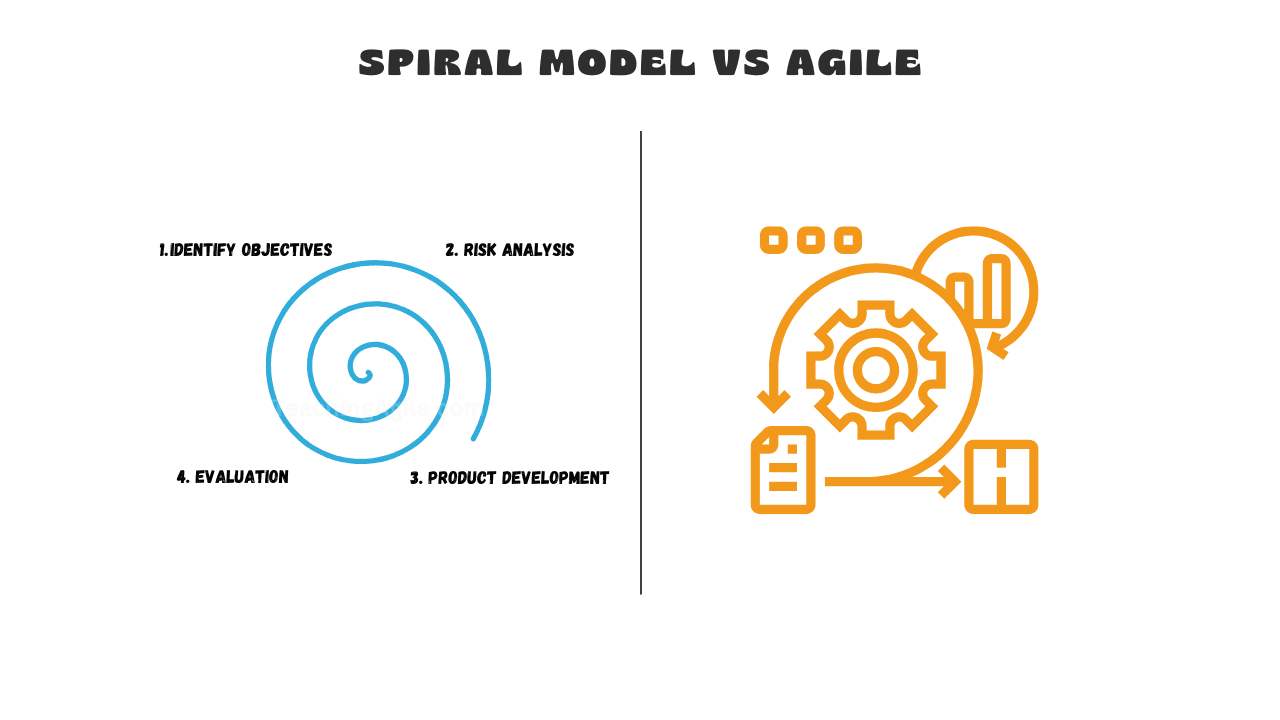 Spiral Model vs Agile Model Comparison for Software Development Projects
Are you torn between structured risk management and rapid adaptability? The Spiral Model prioritizes formal risk analysis, while Agile methodologies emphasize rapid value delivery through continuous feedback. Unlike the sequential Waterfall approach or simple Iterative models, both offer sophisticated solutions for managing uncertainty.
This guide helps you choose the right approach based on your project's risk profile, compliance needs, and market dynamics. Understanding when formal risk analysis trumps rapid feedback - and when it doesn't - can determine project success.
The Spiral Model treats risk as a first-class citizen, while Agile frameworks prioritize rapid feedback and adaptation.
Spiral Model: Formal and Systematic
Agile: Implicit and Continuous
| Aspect | Spiral Model | Agile (Scrum/Kanban) |
|---|---|---|
| Iteration Length | 3-6 months typically | One to four weeks or continuous flow |
| Risk Assessment | Formal phase | Integrated into daily work |
| Planning | Comprehensive upfront | Just-in-time planning |
| Documentation | Comprehensive reports | Working software over documentation |
| Flexibility | Fixed per spiral | Highly flexible scope |
Spiral Model Teams:
Agile Teams:
Spiral Model:
Agile:
Ideal Scenarios:
Spiral Advantages:
Example: Medical Device Software A cardiac monitoring system requires FDA compliance, formal safety analysis, and extensive validation - all strengths of the Spiral Model's structured approach.
Target Industries:
Spiral Benefits:
Project Characteristics:
Why Spiral Succeeds:
Market Conditions:
Agile Advantages:
Example: SaaS Startup A project management tool needs to test features with early adopters, iterate based on usage data, and respond to competitor moves - all enabled by Agile's rapid cycles.
Team Characteristics:
Why Agile Thrives:
Project Context:
Agile Benefits:
Many organizations successfully combine Spiral's risk management with Agile's rapid delivery for optimal results.
Quarterly Spirals with Agile Sprints:
Planning Phase: Spiral Planning (Initial Weeks)
Execution Phase: Agile Execution (Main Development)
Evaluation Phase: Spiral Evaluation (Final Review)
Risk Level:
Requirements:
Team Size:
Compliance:
Timeline:
Customer Access:
Choose Spiral when:
Choose Agile when:
Choose Hybrid when:
The choice between Spiral and Agile isn't binary. Both methodologies offer valuable approaches to managing uncertainty through different philosophies.
Choose Spiral when failure costs are high, risks are significant, and you need formal risk management with comprehensive documentation.
Choose Agile when speed matters, requirements will evolve, and you can manage risk through rapid feedback and continuous delivery.
Choose Hybrid when you need formal risk management for critical components combined with rapid iteration for features.
Success depends on understanding your project's unique risk profile, regulatory constraints, and market dynamics. Consider your team size, compliance needs, and stakeholder availability when making this critical decision.
The best methodology is the one that aligns with your specific context - not organizational preferences or industry trends.
Can you combine Spiral and Agile in a single project?
How do Spiral and Agile methodologies handle technical debt differently?
Which methodology is better for distributed or remote teams?
How do security considerations differ between Spiral and Agile?
Can startups effectively use Spiral Model, or is Agile always better?
How do these methodologies integrate with DevOps practices?
Which approach handles vendor management and third-party integrations better?
How do cultural differences in organizations affect methodology choice?
What happens when project scope is completely uncertain?
How do testing strategies differ between these methodologies?
Can these methodologies handle changing business models during development?
How do these approaches handle knowledge transfer and team onboarding?
Which methodology better supports innovation and experimentation?
How do maintenance and support considerations differ?
How do these methodologies address environmental and sustainability concerns?